
10 Deadly Stereotypes about Iran We Hear in Cross Cultural Training
Challenge dangerous misconceptions about Iran with factual insights from cross-cultural training experts. Discover the truth behind common stereotypes: Iranians aren’t Arabs, speak Persian not Arabic, have rich pre-Islamic heritage, and maintain diverse religious practices. Essential reading for dispelling Iranophobic myths and understanding authentic Iranian culture.
Common Stereotypes of Iranians
I’ve trained a lot of business professionals doing business with Iran, and the one common stereotype they all had of Iran was of a nation of very serious, religious people. If you know Iran, you know this isn’t the case. N. Payne, Iran Cross Cultural Training Expert, Commisceo Global
As a company that provides Iran cultural awareness training, we get excellent insight into the misconceptions, stereotypes, fears and worries many foreigners hold.
We’re going to share 10 of the most DEADLY!
Deadly not because they can cause death; deadly in that they are based on ignorance and falsehood, and lead only to misunderstanding.
Iran regularly features in global news, bandied around by governments arguing the potential benefits or drawbacks of doing business in Iran.
Although Iranophobic comments were somewhat curtailed with the lifting of sanctions in 2016, this was reversed by the Iranophobic rhetoric of Donald Trump, who went so far as to label Iran the world’s ‘Number One Terrorist State’.
However, efforts to bridge understanding and dispel common cultural misconceptions of Iran continue, and it’s in this vein that we present you with some of the most common false Iranian stereotypes that we come across in our Iran-focused cross cultural training sessions. If you want to learn more about what such training involves, you can read more in our article on What is Cross Cultural Training?
10 Stereotypes of Iranians It’s Time to Kill
1. Iranians are Arabs
Due to its association with Islam, Iran is often mistakenly considered an Arab state. There are a number of reasons for this.
One is that the names Iran and Iraq are similar (Iraqis are Arabs), and another is that both countries practice Islam. Finally, another reason is that both countries share the Arabic alphabet.
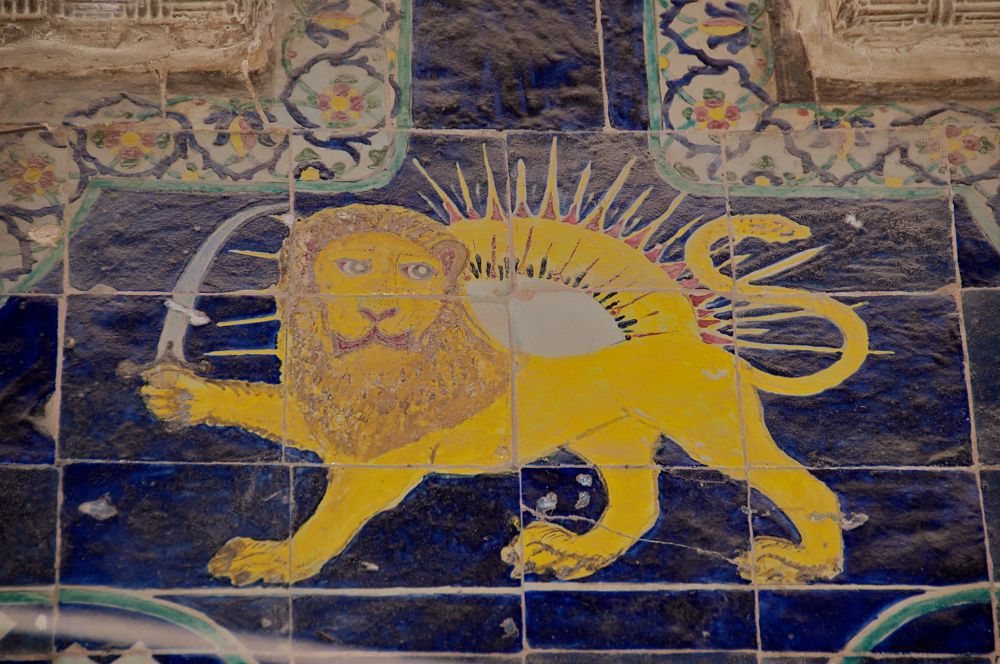
The Lion and Sun (Shir-o-khorshid) is one of the better-known emblems of Iran, rooted in its long history.
Photo by A. Davey on Flickr (CC BY 2.0).
2. Iranians speak Arabic
No, they speak Persian or Farsi, as it is usually referred to. This is an Indo-European language that is more closely related to English than the Scandinavian languages.
If you are doing business in Iran, do not get this mixed up, as it would look bad. However, there is a small population of Arabs who live in Iran who do speak Arabic as their mother tongue. Similarly, you also have speakers of Kurdish, Baluchi and other regional languages.

Many Iranians can speak some basic English. It’s normal to see signs in Farsi, English and also Arabic.
Photo taken in Shiraz by Paul Keller (Flickr CC BY 2.0)
3. Iran is an aggressive country
In the modern history timeline, Iran has not initiated war and has instead only defended itself (i.e. the Iran / Iraq war, which was initiated by Iraq and supported by the USA).
The Iranian leadership cites the defensive principle of ‘no first strike,’ and it has the lowest per capita military budget in the Persian Gulf.

Iran’s turbulent relationship with the USA has long contributed to it’s depiction as being aggressive.
Photo by Marco Verch on Flickr (CC BY 2.0)
4. Iranians are religious extremists
Although the conception of the Iranian government as religious ‘extremists’ is open to debate, very few can argue that the Iranian people themselves are religious extremists.
The diversity of Iranian Muslims presents a landscape in which there are very practising Muslims, whilst others don’t practice at all. Personal experience of being in Iran is that religious symbolism is very much the norm, but there are a great many people who do not practice and, if they do, they don’t do so regularly or consistently. It’s also worth remembering that Iran also has religious minority communities, such as Iranian Jews and Bahais, although the latter is not recognized as a religion by the state.

Shia worship and practice tend to focus on things such as martyrdom and sacrifice, which often give the impression of extremism. This isn’t the case.
Photo of Ashura procession in Iran taken by Ninara on Flickr (CC BY 2.0)
5. Forced marriage is the norm in Iran
This is not the case. Although marriage may be forced in some families, individuals are typically able to choose their own spouses.
Forced marriage is officially prohibited under Iranian law, which states that both parties must consent to marriage. However, in practice the issue is closely linked to early and child marriage, particularly for girls. Iranian law allows girls to marry from the age of 13, and even younger with the permission of a father or a judge. As a result, some marriages take place under strong family pressure, meaning that genuine consent may be limited. These marriages are often influenced by economic hardship, traditional social expectations, and patriarchal family structures, especially in rural or disadvantaged areas.

Most Iranians fall in love with the person they marry. However, they also tend to listen to their family’s opinion too when it comes to choosing a spouse.
Photo of the happy couple by Beshef on Flickr (CC BY 2.0)
6. Women cannot drive, vote, or work in Iran
Women are fully integrated into Iranian life and are able to drive, vote, receive a full education, and work.
It is notable that the majority of college students are female, which is indicative of Iran having the highest female: male education enrollment ratio amongst sovereign nations.
Despite the social and political challenges they may face, Iranian women are highly educated and play an active role in many areas of professional and public life.

Unlike some other Muslim countries in the region, women are not hidden away in Iran. They are very much part of public life including the constant traffic!
Photo by Kamyar Adl on Flickr (CC BY 2.0)
7. Iranians are defined by Shia Islam
Iranians have 2,500 years of pre-Islamic culture that continues to strongly influence their identity.
Iranians are commonly considered to have finally embraced Islam as a cohesive whole in the ninth century. Prior to this, Persia, as it was then known, had already enjoyed an ancient and powerful history, which started with King Cyrus the Great, who successfully conquered huge areas and created a unified Persia. Persian culture is rich in all sorts of stories, symbolism, manners, customs, and etiquette, including ‘ta’rof’ – the quintessentially Iranian way of communicating.

Although most Iranians are Shia Muslims, Persian psychology is rooted in the religion of Zoroastrianism. Something that’s still in the shadows in modern Iran.
Photo by Sl1ingshot on Flickr (CC BY 2.0)
8. Public executions are the norm in Iran
It is very unlikely that anyone visiting Iran would experience public executions – particularly since they were banned in 2008.
However, since the 2008 ruling, executions have continued to be carried out in public for matters that have so enraged the general population that the ruling judge has deemed this necessary. The punishments are usually carried out at 6:00 am and in the area in which the crime took place. Human rights groups have suggested that 5 – 10% of executions have taken place in this manner.

Iranians are much more interested in visiting parks than watching people getting punished.
Photo by Ninara on Flickr (CC BY 2.0)
9. Iranian women are dressed entirely in black
Although women may cover themselves entirely in black, it is not the norm.
Most women wear fairly modest clothing coupled with the mandatory headscarf. Make-up and other adornments are common.

The reality on the ground in Iran is very different to what the media may show you. Many women don’t wear the traditional black chador.
Photo by Kamyar Adl on Flickr (CC BY 2.0)
10. Iranians live in the desert
No, this is not the case. Iran is geologically and climatically diverse.
Many people are unaware that Iran is home to some of the world’s most beautiful ski resorts. Yes, it has some deserts, but most people don’t want to live in a desert!

Iran has deserts, mountains, beaches, and anything else you can think of.
Photo of gravity-defying Iranian by Hamed Saber on Flickr (CC BY 2.0)
If you know someone who buys into the Iranophobic mantra, then maybe share these stereotypes with them. Although we can’t train everyone, we can certainly all do our bit to help dispel misunderstandings.
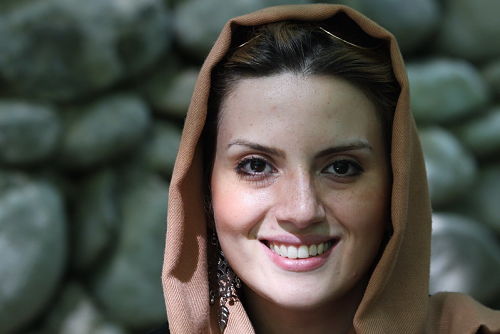
Main photo thanks to Hapal on Flickr (CC BY-ND 2.0)
Iran Cultural Awareness Training for International Professionals
Working effectively with Iranian colleagues, partners, or clients requires an understanding of the cultural values that shape communication, relationships, and professional interaction. Iranian business culture places strong emphasis on trust, respect, and relationship building, with communication styles often combining warmth, diplomacy, and indirectness.
Our Iran Cultural Awareness training course provides professionals with the cultural insight needed to navigate these dynamics successfully. Participants learn how Iranian values influence workplace behavior, communication, and business etiquette so they can build trust, collaborate effectively, and develop productive professional relationships with Iranian counterparts.

You might also like these articles…

Etiquette Tips for Doing Business in Iran
Planning to do business in Iran? This guide offers essential tips on navigating Iranian culture, from building trust to understanding communication styles and etiquette. Whether…
Ta’rof – Understanding the Essence of Iranian Etiquette & Culture
Learn about ta’rof in Persian culture and how this system of etiquette and politeness can influence doing business in Iran or working with Iranians.

Iran Business Culture Guide
Iranian Business Culture: What International Professionals Should Know Contents hide Iranian Business Culture: What International Professionals Should Know Key Insights into Iran Business Culture Doing…