
How Lack of Cultural Sensitivity in Business Leads to Costly Mistakes
Discover how cultural insensitivity devastates business through real examples like Microsoft’s $200 million Kashmir error and McDonald’s offensive Chinese ads. Learn essential cultural awareness strategies for international success and avoid costly cross cultural mistakes that damage your business bottom line.

Why Cultural Sensitivity in Business Is Critical for Global Success
In this article, we look at how a lack of cultural sensitivity can have big cost implications for a business.
‘Western’ businesses that believe their approach to business is ‘the only way’ are losing out on contracts and productivity when it comes to interfacing with foreign companies. This is why intercultural business skills training is so important.
This affects them financially as they are failing to win deals or to maximise the potential of mergers and acquisitions. Likewise, staff venturing overseas with low cultural awareness lack productivity when in-country, compared to their culturally informed peers.
Although the business world is becoming increasingly globalised, this hasn’t led to a homogeneity of culture when it comes to product, marketing, sales, and service. This is leaving less culturally aware businesses behind.
Understanding Cultural Sensitivity in Global Business Environments
Many people agree with the phrase that ‘the world is getting smaller’ – it is hard to disagree.
Advances in transport and communications technology combined with the development of a global, interconnected economy have resulted in people from different nations, cultures, languages, and backgrounds now communicating, meeting, and doing business with one another more than ever.
There are some that claim this newfound intimacy has led to a greater understanding of ‘the other’, ‘the foreign’, and ‘the alien’, and as a result, our cultural differences are diminishing. We are all becoming closer.
However, in reality, the opposite is true.
As we come together, our cultural differences become accentuated as we start to realise that the rest of the world is not reading from the same book.
One area where this is felt most painfully is in business.
Why a Lack of Cultural Sensitivity in Business Leads to Costly Mistakes
Why does business feel the pain? Because it usually ends up in an expensive mistake that could/should have been avoided! And businesses don’t like losing money!
Very few businesses can escape the need to at some point in time deal with foreign colleagues, clients, or customers. Business is international, and if an organisation wants to develop and grow, it needs to harness the potential an international stage offers.
Twenty years ago, British, European, and American organisations doing business abroad had very little competition due to the lack of rival industrialised nations. Back then, it was easy to do business ‘our way‘.
Today, some of the world’s largest economies include Japan, China, Mexico, Brazil, India, and South Korea.
As a result, there has been a small shift from ‘our way’ to ‘let’s try and understand your way’ to find a middle way. Why? ‘Western’ organisations are feeling the impact a lack of cultural sensitivity can and does have upon business performance.

Photo by Andrea Piacquadio from Pexels
How Cultural Sensitivity Training Improves Business Performance
Many international businesses are now investing heavily in providing staff with language lessons in order to be able to crack foreign markets, as well as providing cultural awareness training to address issues such as etiquette, protocol, communication styles, and negotiation approaches.
In a competitive world, such businesses appreciate that greater cultural sensitivity will assist them in forging longer and more prosperous relationships.
Yet progress is slow.
Unfortunately, a subconscious sense of cultural superiority still seems to reign; one that assumes the rest of the world does business like us, and if they don’t, then they should.
The world’s inhabitants, however, come from many faiths, cultures, world views, and experiences, which makes such an assumption futile. We are all different, and as a result, doing business across cultures (whether political, religious, cultural, or linguistic) requires cultural sensitivity, meaning a sense of empathy, flexibility, and creativity informed by cultural knowledge. As with most things in life, business has learnt the hard way.
To illustrate how these lessons have and are still being learnt, we will look at some examples where a lack of cultural sensitivity has let a company, individual, or product down.
6 Real World Examples of Cultural Sensitivity Failures in Business
Culture comes in many shapes and sizes. It includes areas such as politics, history, faith, mentality, behaviour, and lifestyle.
The following examples demonstrate how a lack of cultural sensitivity led to failure.
1. Microsoft in India: A Cultural Sensitivity Mistake That Cost Millions
When colouring in 800,000 pixels on a map of India, Microsoft coloured eight of them a different shade of green to represent the disputed Kashmiri territory. The difference in greens meant Kashmir was shown as non-Indian, and the product was promptly banned in India.
Microsoft was left to recall all 200,000 copies of the offending Windows 95 operating system software to try to heal the diplomatic wounds. It cost them millions.

2. McDonald’s in China: A Cultural Sensitivity Failure in Advertising
The fast-food giant McDonald’s spent thousands on a new TV ad to target the Chinese consumer. The ad showed a Chinese man kneeling before a McDonald’s vendor and begging him to accept his expired discount coupon.
The ad was pulled due to a lack of cultural sensitivity on McDonald’s behalf. The ad caused an uproar over the fact that begging is considered a shameful act in Chinese culture.

3. Gerber in Africa: Packaging Mistakes and Cultural Sensitivity in Business
When the US firm Gerber started selling baby food in Africa, they used the same packaging as in the US, i.e,. with a picture of a baby on the label.
Sales flopped, and they soon realised that in Africa, companies typically place pictures of contents on their labels. Whether this story is true or not is now being questioned.

4. Hollywood Buddha Controversy: Cultural Insensitivity and Religious Offence
The film “Hollywood Buddha” showed a complete lack of cultural sensitivity by causing outrage and protest on the streets of Sri Lanka, Malaysia, and Burma when the designer of the film’s poster decided to show the lead actor sitting on the Buddha’s head, an act of clear degradation against something holy.

5. Big Brother in the Middle East: Cultural Sensitivity and Media Backlash
The concept of Big Brother was somehow taken to the Middle East. The show was taken off air after its first few episodes due to public protests and pressure from religious bodies stating the show’s mixed-sex format was against Islamic principles.

6. Walmart in Germany: How Cultural Insensitivity Led to Business Failure
US supermarket giant Walmart completely failed in its effort to break into the German market. Analysts saw the transplanting of US corporate management and retail culture onto an alien environment as the main cause for the massive failure. You can read more about this case study in our article on cultural differences in retail.

How Language and Translation Mistakes Impact Cultural Sensitivity in Business
The business world is littered with poor translations that have caused great embarrassment to their perpetrators due to their lack of cultural sensitivity. The following are some of the choicest examples, and if you want more, then check out our article on cross cultural marketing blunders.
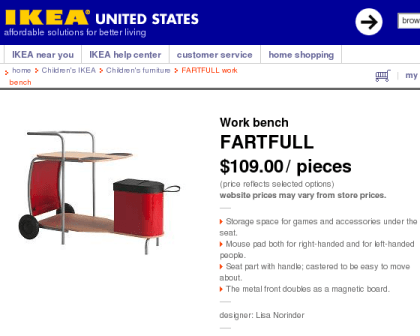
IKEA once tried to sell a workbench called FARTFULL – not a hugely popular product for obvious reasons.
Neither Clairol nor the Irish alcoholic drink Irish Mist properly considered the German language when they launched their products there. Clairol’s hair-curling iron “Mist Stick” and the drink “Irish Mist” both flopped – why? ‘Mist’ translates in German as “manure”.

The Japanese seem to have a particular flair for naming products. The country has given us gems such as “homo soap”, “coolpis”, “Germ bread” and “Shito Mix”.

Coors had its slogan, “Turn it loose,” translated into Spanish, where it became “Suffer from diarrhoea.”

Build Cultural Sensitivity in Your Organization
In today’s global business environment, cultural sensitivity is not a “nice to have” — it is a core capability that directly impacts performance, relationships, and results. Organisations that invest in developing cultural awareness and intercultural communication skills are better equipped to enter new markets, collaborate across borders, and avoid costly mistakes.
Our online cultural awareness training course is designed to help professionals build the practical skills needed to work effectively across cultures. Through real-world scenarios, expert insights, and actionable strategies, your teams will learn how to communicate with confidence, adapt to different cultural expectations, and strengthen international business relationships.
You might also like these articles…

Cross Cultural Communication in Business and the Workplace
Business Examples and Insights into Cross Cultural Communication at Work Contents hide Business Examples and Insights into Cross Cultural Communication at Work What Is Cross…

Cross Cultural Negotiations in International Business
What is Cross Cultural Negotiation? Contents hide What is Cross Cultural Negotiation? Why Cultural Awareness Matters in International Negotiations Key Cultural Differences in Cross Cultural…

Cultural Awareness in Business: Examples of Misunderstandings
Why Cultural Awareness Matters in International Business Contents hide Why Cultural Awareness Matters in International Business 7 Real Examples of Cultural Misunderstandings in Business The…