
Mexico Business Culture Guide
Understanding Mexico’s business culture is essential for professionals doing business in Mexico or working with Mexican colleagues. This guide explains key aspects of Mexican business culture, including Mexican workplace culture, business etiquette. communication styles, relationship building, and everyday business practices in Mexico.

Mexican Business Culture: What International Professionals Should Know
“We work extensively with U.S. clients navigating business relationships in Mexico, and one of the biggest surprises for many of them is the cultural diversity within the country itself. Regional differences in communication styles and relationship expectations can significantly shape how business gets done.”
G. Brice, Commisceo Global – Mexico Cross Cultural Training Experts
As a cross cultural training company, we help professionals doing business in Mexico understand the cultural context that frames how work and business get done.
Mexican workplace culture places strong emphasis on relationships, hierarchy, and communication patterns that influence everyday professional interactions.
For professionals working with Mexican colleagues, recognising the nuances of Mexican communication style and everyday business practices in Mexico can make collaboration smoother and more productive.
Drawing on extensive experience delivering Mexico cultural awareness training, we are going to share some of the insights needed to navigate Mexican business environments successfully. If you want to dig deeper, then we suggest enrolling in our Mexico cultural awareness training course.
Poll: Challenges of Doing Business in Mexico
Many professionals report that building relationships and understanding communication styles are among the most important aspects of working successfully in Mexican business environments. Let’s explore these further.
Key Insights into Mexican Business Culture
Understanding Mexican business culture helps international professionals build trust, communicate effectively, and navigate workplace expectations when doing business in Mexico.
The following insights highlight some of the most important features of Mexican workplace culture and everyday business interactions.
• Relationships play a central role in business success, and trust often develops before negotiations or contracts move forward.
• Hierarchy influences decision making, with senior leaders typically approving important business agreements.
• Communication tends to be diplomatic and relationship-focused, particularly when discussing disagreement or sensitive topics.
• Meetings often begin with personal conversation, reflecting the importance of relationship building in professional settings.
• Patience and flexibility are important, as negotiations and decisions may take longer than expected.

Women are well represented at the professional level in Mexico. Photo by UN Women (CC BY-NC-ND 2.0)
Doing Business in Mexico: Business Practices and Culture
When doing business in Mexico, professional relationships and trust play a central role in how partnerships develop. Personal introductions, hierarchy, and reputation often influence how business opportunities progress. Understanding these dynamics can help international professionals build stronger relationships and navigate negotiations more effectively.
Business Relationships in Mexico
• The right connections can play an important role in business success.
• First impressions matter, and introductions from trusted contacts often shape how new relationships develop.
• Initial meetings may involve senior representatives who help establish credibility and facilitate introductions.
• Once relationships are established, day-to-day discussions may be handled by other members of the team.
• Demonstrating trustworthiness, sincerity, and personal integrity is essential when building professional relationships.
• Business discussions often include conversation about personal background, family, and interests.
Meetings and Business Interactions in Mexico
• Business meetings are often arranged well in advance and reconfirmed before taking place.
• While punctuality is appreciated, schedules can sometimes be flexible.
• Initial meetings may focus on relationship building before moving into detailed business discussion.
• Meetings can occasionally be rescheduled or delayed, so flexibility is helpful.
• Providing written materials in Spanish can help ensure clarity and demonstrate preparation.
Negotiation Practices in Mexico
• Seniority often carries weight in negotiations, so it is advisable to include senior representatives in meetings.
• If Spanish is not spoken within your team, using an interpreter can help avoid misunderstandings.
• Agreements may take several meetings to develop as trust and understanding build.
• Face-to-face meetings are generally preferred for important discussions.
• Negotiations and decision making may take time, so patience and flexibility are important.
• Deadlines may sometimes be approached more flexibly depending on relationships, organizational culture, and context.
• Negotiations may involve bargaining, so it is common not to present your final offer immediately.
• Legal advisors are often consulted outside the negotiation room rather than participating directly in meetings.

Teamwork in Mexico is built on strong relationships, trust, and a collaborative spirit that values group harmony and shared success.
Communication Style in Mexican Business Culture
Understanding the Mexican communication style is important for professionals working across cultures. Communication in Mexican business culture is often diplomatic, relationship oriented, and influenced by hierarchy. When working with Mexican colleagues, messages may sometimes be expressed indirectly in order to maintain harmony and respect within professional relationships.
• Communication in Mexican workplaces is often polite and diplomatic, especially when discussing disagreement or sensitive topics.
• Direct criticism is usually avoided in group settings, particularly when speaking with senior colleagues.
• Building rapport and personal trust often plays an important role in effective communication.
• Conversations may begin with informal discussion before moving into business topics.
• Hierarchy can influence who speaks most in meetings and whose opinions carry the greatest weight.
• Maintaining respect and positive working relationships is often considered as important as the message itself.
Workplace Culture and Values in Mexican Business Culture
Understanding Mexican workplace culture helps international professionals navigate expectations around hierarchy, teamwork, and decision making. Mexican business culture often combines respect for authority with strong personal relationships, meaning trust and credibility play an important role in how colleagues collaborate and make decisions.
• Hierarchy often plays an important role in Mexican workplaces, and senior leaders are usually responsible for major decisions.
• Respect for authority and professional titles can influence how employees interact with managers and senior colleagues.
• Personal relationships often contribute to stronger collaboration and trust within teams.
• Loyalty and commitment to colleagues and organizations are often highly valued.
• Team members may place importance on maintaining harmony and avoiding open conflict in the workplace.
• Trust is often developed through reliability, personal rapport, and long term professional relationships.
Management Style in Mexico
Understanding the management style in Mexico helps international professionals work more effectively with Mexican colleagues and teams. Mexican business culture often combines strong personal relationships with clear hierarchical structures, meaning managers are expected to lead with authority while building trust and respect within their teams.
Key characteristics of management practices in Mexico include:
• Managers are expected to provide clear direction and leadership.
• Hierarchy is respected, and senior leaders usually make final decisions.
• Personal relationships and trust influence workplace collaboration.
• Communication may be indirect, particularly when discussing disagreement.
• Team loyalty and group harmony are often valued in organizations.
Want to understand how leadership really works in Mexican organizations? Explore our detailed guide to the Management Style in Mexico
Challenges When Doing Business in Mexico
While Mexico offers significant opportunities for international organizations, professionals may encounter certain challenges when adapting to local business practices. Understanding the challenges of doing business in Mexico helps international professionals navigate expectations more effectively and build stronger relationships with Mexican colleagues and partners.
Some of the most common problems doing business in Mexico arise from differences in communication styles, decision making processes, and relationship building practices. Recognizing these differences can help organizations reduce misunderstandings and work more effectively in Mexican business environments.
Common challenges include:
• Building trust and professional relationships before business discussions progress.
• Understanding diplomatic or indirect communication styles in professional conversations.
• Navigating hierarchical decision making structures within organizations.
• Adapting to negotiation processes that may take longer than expected.
• Managing flexible timelines or shifting schedules in business discussions.
• Ensuring clarity when working across language differences.
For many international professionals, these cultural differences can initially feel like barriers to doing business in Mexico. Many organizations address these challenges through cross cultural training that helps teams develop stronger cultural awareness and communication skills.
Tips for Doing Business in Mexico
Professionals who understand the key elements of Mexican business culture are more likely to build strong relationships and work effectively with local partners and colleagues.
The following tips can help international professionals adapt more easily when doing business in Mexico and navigating Mexican workplace culture.
• Invest time in relationships. Building trust and personal rapport often plays an important role before business discussions move forward.
• Respect hierarchy. Senior leaders typically make final decisions, so it is important to understand who holds authority within an organization.
• Be patient during negotiations. Agreements may take time as relationships develop and discussions progress through multiple meetings.
• Communicate diplomatically. Communication in Mexican business culture is often polite and relationship focused, especially when addressing disagreement.
• Be flexible with schedules. Meeting timelines and deadlines can sometimes shift, so maintaining flexibility can help avoid frustration.
• Prepare for face to face engagement. Personal meetings are often valued when building trust and developing professional partnerships.
By understanding these practices, professionals can navigate Mexican workplace culture more effectively and build productive long term business relationships.
“Many of the challenges international professionals face in Mexico are not about strategy or capability, but interpretation. Differences in communication style, giving feedback, or managing conflict can prove a real challenge without cultural awareness.”
N. Carter, Commisceo Global Cultural Intelligence Team – Mexico Cross Cultural Training Experts
Business Etiquette in Mexican Business Culture
Understanding Mexican business etiquette helps international professionals create positive first impressions and build professional credibility. While many aspects of Mexican workplace culture are relationship focused and flexible, certain professional behaviors such as punctuality, dress, and the exchange of business cards remain important in formal business settings.
Meeting Etiquette in Mexico
• Arriving on time for meetings is considered professional and respectful.
• Local counterparts may occasionally arrive later due to busy schedules.
• It is important to remain patient and avoid showing irritation if meetings begin late.
• Initial business meetings are usually more formal than later interactions.
Business Dress in Mexico
• Professional appearance is generally conservative in formal business environments.
• Men typically wear dark business suits and formal shirts.
• Women often wear business suits or conservative professional dresses.
• Dress standards may vary depending on the industry and city.
Business Cards in Mexican Business Etiquette
• Business cards are commonly exchanged during introductions at meetings.
• It can be helpful to include Spanish on one side of the card.
• Cards often include professional titles and qualifications.
• Presenting the Spanish side of the card facing the recipient is considered courteous.
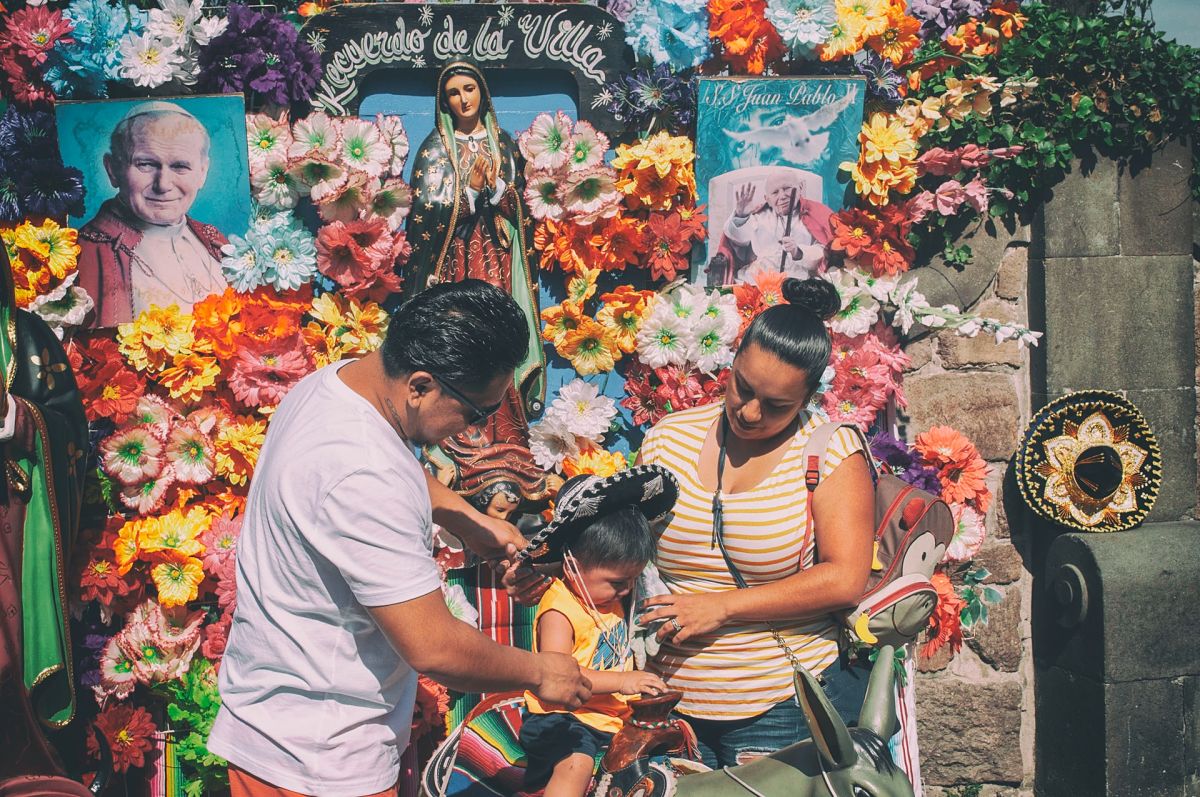
Family means everything in Mexican culture. Photo by Monika Izdebska
Social Etiquette and Cultural Norms in Mexico
Understanding the social customs and traditions that shape everyday life in Mexico can help international professionals build stronger relationships with Mexican colleagues and partners. Many aspects of Mexican workplace behavior are influenced by broader cultural values such as family, respect for hierarchy, and strong personal relationships.
Family and Social Values in Mexico
• The family plays a central role in Mexican society and social life.
• Extended family relationships often provide strong social support networks.
• Family members frequently help one another with employment, housing, or financial matters.
• Traditional family structures are still common in many parts of the country.
• Mothers are highly respected within the family structure.
Hierarchy and Respect in Mexican Society
• Mexican society has historically placed value on hierarchy and respect for authority.
• People often show respect for authority and seniority.
• Rank and status may influence how individuals interact socially and professionally.
• It is generally considered important to understand who holds authority in a group or organization.
• Respect for hierarchy can influence both social and workplace relationships.
Gender Roles and Cultural Traditions
• Traditional ideas about gender roles have historically influenced aspects of Mexican society, although attitudes and expectations continue to evolve across regions and generations.
• Concepts such as “machismo” historically reflected expectations around masculinity and social status.
• Modern Mexican society is diverse and evolving, and attitudes toward gender roles continue to change across generations and regions.
Social Greetings and Meeting Etiquette
• Handshakes are common when greeting someone for the first time.
• Friends and acquaintances may greet each other with a hug or light embrace once they know each other well.
• In social settings, it is polite to wait until invited before using someone’s first name.
Gift Giving Etiquette in Mexico
• When invited to a Mexican home, it is customary to bring a small gift such as flowers or sweets.
• Gifts are often opened when they are received.
• White flowers are considered an appropriate and positive gift.
• Certain flowers, such as marigolds, are associated with funerals and should be avoided.
Dining Etiquette in Mexico
If invited to a Mexican home:
• Arriving slightly later than the stated time is often acceptable.
• At smaller gatherings, the host usually introduces guests.
• Wait until invited to sit before taking your seat.
During the meal:
• Keep your hands visible at the table while eating.
• Wait for the host to begin before starting your meal.
• When finished eating, place your knife and fork together on the plate.

Fresh fruit and vegetables can be found year-round all over Mexico. Photo taken in Mexico City by Carl Campbell
Religion and Language in Mexico
Religion in Mexico
• Roman Catholicism has historically been the dominant religion in Mexico.
• Religious traditions and holidays often play an important role in family and community life.
• Catholic cultural traditions continue to influence many social customs and celebrations.
• Mexico is increasingly diverse, with growing Protestant, evangelical, and non-religious communities.
• In professional environments, religion is generally considered a private matter and is rarely discussed in the workplace.
Language in Mexico
Spanish is the official and most widely spoken language in Mexico. It is used in government, education, and business.
• Spanish is spoken by the vast majority of the population.
• Mexico is linguistically diverse, with many indigenous languages still in use.
• More than 60 indigenous languages are recognized across the country.
• Many people who speak indigenous languages also speak Spanish.
The most widely spoken indigenous language is Nahuatl, followed by Maya, Mixtec, and Zapotec.

The Catholic Church has long had an influence over Mexican society. Photo taken in Reserva de la Biosfera Sierra Gorda by Omar Corona
Key Facts About Mexico
• Location: Middle America, bordering Guatemala, the Caribbean Sea and the Gulf of Mexico, between Belize and the United States
• Capital: Mexico City
• Climate: Varies from tropical to desert
• Population: Approximately 130 million (2025 estimate)
• Ethnic Make up: Mestizo (Amerindian-Spanish) 60%, Amerindian or predominantly Amerindian 30%, White 9%, Other 1%
• Religions: Christianity. Roman Catholic majority, with growing Protestant and other religious communities.
• Government: Federal republic
Mexico Cross Cultural Training Course
Understanding Mexican business culture can help professionals build trust, communicate more effectively and work with greater confidence in Mexico.
Our online Mexico Cultural Awareness course explores Mexican values, communication styles, workplace expectations and business etiquette through practical examples and guidance. It is designed for professionals working with Mexican colleagues, clients or partners, as well as those preparing to do business in Mexico.

You might also like these articles…
Mexico Management Culture Guide
Management Style in Mexico: A Guide for International Managers Contents hide Management Style in Mexico: A Guide for International Managers Management in Mexico The Role…

How Mexican Cultural Values Shape the Workplace
Mexican Cultural Values at Work: Communication, Teamwork and Management Contents hide Mexican Cultural Values at Work: Communication, Teamwork and Management Key Insights: Mexican Cultural Values…
The Mexican Business Communication Style
Understanding Mexican Communication in Business: A Practical Guide for Global Professionals Contents hide Understanding Mexican Communication in Business: A Practical Guide for Global Professionals What…