
Thailand Business Culture Guide
Thai business culture is shaped by hierarchy, respect, and a strong focus on maintaining harmony in relationships. While interactions may appear relaxed and friendly, success when doing business in Thailand depends on understanding indirect communication, social expectations, and how decisions are influenced by status and trust.
Thai Business Culture: What International Professionals Should Know
Thailand is often seen as approachable and easy to navigate due to its welcoming nature and outward friendliness. However, beneath this sits a culture where hierarchy, respect, and harmony shape how business is conducted.
For international professionals, the challenge is not access, but interpretation. What appears clear on the surface often requires deeper cultural understanding to navigate effectively.
This is why Thailand cultural awareness training is so important if you are doing business in Thailand or with Thai clients or partners.
“Many professionals assume Thailand is straightforward because the people are pretty laid back. In reality, the biggest challenge is around communication and recognising that what is not said is often just as important as what is.”
N. Payne, Cross Cultural Training Expert, Commisceo Global
Key Insights into Thai Business Culture
Understanding a few core cultural principles can significantly improve how you operate in Thailand.
• Hierarchy and respect influence communication, decision making, and workplace dynamics
• Relationships and trust are essential before business can progress effectively
• Saving face shapes how feedback, disagreement, and conflict are handled
• Indirect communication requires careful interpretation of meaning and intent
• Patience and flexibility are necessary when navigating timelines and decisions

In Thailand, even Ronald McDonald offers the wai gesture to greet customers. Thai business culture blends old traditions with the new. Photo by Davidlohr Bueso (CC BY 2.0)
Doing Business in Thailand: Business Practices and Culture
Doing business in Thailand requires balancing professional objectives with cultural awareness. While structures exist, outcomes are often shaped by relationships, hierarchy, and communication style.
Business Relationships in Thailand
• Relationships are central to business success, with trust forming the foundation of effective collaboration.
• Trust is developed over time through consistent, respectful interaction rather than transactional exchanges.
• Investing in rapport building strengthens communication, cooperation, and long term business outcomes.
Meetings and Business Interactions in Thailand
• Meetings are typically formal in structure but may not always result in immediate decisions.
• Preparation is important, including sharing agendas or materials in advance to support discussion.
• Flexibility is expected, as outcomes may be shaped outside the meeting through internal consultation.
Decision Making and Negotiation in Thailand
• Decisions are often made by senior figures, sometimes outside formal meeting settings.
• Negotiations tend to be measured and relationship focused rather than fast paced or transactional.
• Direct confrontation or high pressure tactics can damage trust and hinder progress.
For more practical guidance on navigating expectations and avoiding common mistakes, see our article on doing business in Thailand etiquette and taboos.

Thai business culture is deeply rooted in Buddhism, with ‘face’ and honour key to understanding the people. Photo by livefreeordie77 on Flickr (CC BY 2.0)
Communication Style in Thailand
Communication in Thailand is shaped by a strong cultural emphasis on maintaining harmony, preserving relationships, and avoiding situations that may cause embarrassment or loss of face.
As a result, meaning is often conveyed indirectly, requiring careful interpretation rather than relying on words alone.
Indirect Communication in Thailand
• Communication is typically indirect, with messages softened to avoid confrontation or discomfort.
• A direct “no” is rarely used, and responses such as “maybe,” “we will try,” or silence may signal hesitation rather than agreement.
• For international professionals, this can lead to misunderstandings around commitment, timelines, and expectations if messages are taken at face value.
Face and Harmony in Thai Communication
• Protecting face is central to how communication is managed in professional settings.
• Public criticism, direct disagreement, or causing embarrassment can damage relationships and reduce trust, particularly in group environments.
• Feedback is therefore usually delivered privately and carefully, often framed in a way that maintains dignity while addressing the issue.
Non Verbal Communication in Thailand
• Non verbal cues play a significant role in conveying meaning and intent.
• Tone of voice, facial expressions, and overall composure are closely observed, with calm and controlled behaviour expected at all times.
• Displays of frustration, impatience, or strong emotion can be perceived as a loss of control and may negatively impact how individuals are viewed professionally.

Colleagues sharing lunch in Bangkok. People tend to do things in groups, not as individuals. Photo by E. Girardet on Flickr (CC BY-SA 2.0)
Workplace Culture and Values in Thailand
Workplace culture reflects broader societal values of hierarchy, respect, and collectivism.
Family and Collectivism in Thai Society
• Thai society is strongly collectivist, with individuals seeing themselves as part of a wider group such as family, community, or organisation.
• This shapes workplace behaviour, where loyalty, cooperation, and maintaining group harmony are prioritised over individual recognition or personal opinion.
• In practice, employees may avoid standing out, challenging others, or pushing personal agendas if it risks disrupting group cohesion or relationships.
Hierarchy and Respect in Thai Society
• Hierarchy is a defining feature of Thai society and directly influences how people interact in professional environments.
• Age, seniority, and status determine who speaks, who leads discussions, and how decisions are communicated and implemented.
• For international professionals, this means that influence often comes through the right channels, and bypassing hierarchy or treating all levels equally can unintentionally cause friction.
Social Behaviour and Harmony in Thailand
• Maintaining harmony is a core cultural priority and shapes how individuals behave in both social and professional settings.
• Open disagreement, confrontation, or direct criticism is generally avoided, particularly in group environments where it could cause embarrassment.
• As a result, individuals may withhold concerns or soften their views, which can create a gap between what is said publicly and what is actually thought.
Faith and Social Values in Thailand
• Buddhism plays a significant role in shaping Thai values, particularly around respect, humility, and emotional control.
• These principles influence how individuals respond to pressure, conflict, and authority, with calmness and composure seen as indicators of professionalism and maturity.
• In business contexts, this often translates into a preference for measured responses, avoidance of emotional reactions, and a focus on maintaining balance in relationships.

Songkran is a time to get wet and wet others. People show no mercy to strangers on the streets. If you are doing business with Thais, ensure you mark festivals in your calendar, as most Thai professionals will take time off. Photo by toastal (CC BY-NC-ND 2.0)
Management Style in Thailand
Management styles in Thailand are strongly shaped by hierarchy, respect for authority, and the expectation that leaders provide clear direction and stability. Leadership is not only about decision making, but also about maintaining harmony, protecting relationships, and guiding the team in a way that preserves face.
Managers are expected to take responsibility for outcomes while also demonstrating a level of care toward their team. This often creates a more paternalistic leadership style, where authority is respected but also carries an expectation of support, fairness, and personal consideration.
Employees may be reluctant to challenge decisions, particularly in group settings, as doing so could be seen as disrespectful or disruptive. As a result, agreement in meetings does not always reflect full alignment, and managers need to actively create space for input in ways that do not put individuals at risk of losing face.
For international managers, effectiveness comes from adapting how authority is exercised. This includes reading indirect signals, managing feedback carefully, and understanding that influence is often built through relationships and trust rather than direct instruction alone.
For a deeper understanding of leadership expectations and managing teams in Thailand, see our Thailand Management Guide.

A floating river market in Thailand. If you are new to doing business in Thailand, it’s important to learn to go with the flow. Photo by Harvey Enrile on Unsplash
Challenges When Doing Business in Thailand
One of the biggest challenges is misinterpreting politeness and indirect communication as clarity or agreement.
• Indirect communication can create misunderstandings around commitment
• Politeness may mask disagreement or concern
• Hierarchy can limit open discussion and feedback
• Decisions may take place outside formal meetings
• Causing loss of face can damage relationships quickly
Tips for Doing Business in Thailand
Success in Thailand depends on adapting to local expectations while maintaining professionalism.
• Invest time in building relationships and trust
• Show respect for hierarchy and seniority
• Avoid direct confrontation or public criticism
• Pay close attention to tone and non verbal cues
• Be patient with timelines and decision making
• Remain calm and composed in all interactions

Thais rely on street vendors for a lot of their food. Across the country, you will find food markets and stalls, each selling their own particular dishes. Photo by Arty on Unsplash
Business Etiquette in Thailand
Understanding business etiquette in Thailand helps ensure interactions are respectful, professional, and aligned with cultural expectations around hierarchy and harmony.
Meeting and Greeting in Thailand
• The traditional greeting is the wai, where hands are pressed together, with the level reflecting respect and status.
• In business settings, handshakes may be used, particularly with international professionals.
• It is best to follow the lead of your Thai counterpart and mirror their level of formality.
Names and Titles in Thailand
• Titles and honorifics are important and are commonly used alongside first names.
• Correct use of names reflects awareness of hierarchy and respect for status.
• Moving too quickly to informal address can be seen as overly familiar or inappropriate.
Business Card Etiquette in Thailand
• Business cards should be exchanged respectfully using both hands or the right hand.
• Cards should be presented clearly and received with attention and acknowledgement.
• Taking time to read the card signals respect for the individual and their position.
Business Dress in Thailand
• Dress is generally conservative, professional, and appropriate to the business setting.
• Appearance reflects respect for the organisation, the individual, and the interaction.
• Even in warmer climates, maintaining a polished and formal look is expected.

Would you try scorpion on a stick? One of the many weird and wonderful things about Thailand and its culture. Photo by Simon Shim on Unsplash
Social Etiquette and Cultural Norms in Thailand
Understanding social etiquette in Thailand is essential, as everyday behaviours are closely linked to respect, hierarchy, and maintaining harmony. Small actions can carry significant meaning and directly influence how relationships develop.
Gift Giving in Thailand
• Gifts are usually modest and presented with care, often wrapped in bright colours such as gold or yellow, which carry positive meaning.
• Gifts are typically not opened immediately, as doing so may be seen as impolite or overly eager.
• Avoid overly expensive items or anything that could cause embarrassment, as this may create discomfort or a loss of face.
Dining Etiquette in Thailand
• Meals are shared, reflecting a collective culture, with dishes placed in the centre rather than ordered individually.
• A spoon is used in the right hand and a fork in the left, with the fork used to push food onto the spoon rather than for eating.
• It is polite to leave a small amount of food on your plate, as finishing everything may suggest you are still hungry, although rice should not be wasted.
Visiting a Home in Thailand
• Shoes should always be removed before entering a home, and this applies to many offices and traditional spaces as well.
• It is customary to bring a small gift, such as fruit or sweets, as a gesture of appreciation.
• Avoid stepping on the threshold when entering, as it is traditionally believed to be a place where protective spirits reside.
Cultural Taboos in Thailand
Certain behaviours are particularly important to understand.
• The head is considered sacred and should not be touched
• The feet are considered the lowest part of the body and should not be pointed at people
• Public displays of anger or confrontation should be avoided
• Showing disrespect toward the monarchy is highly sensitive
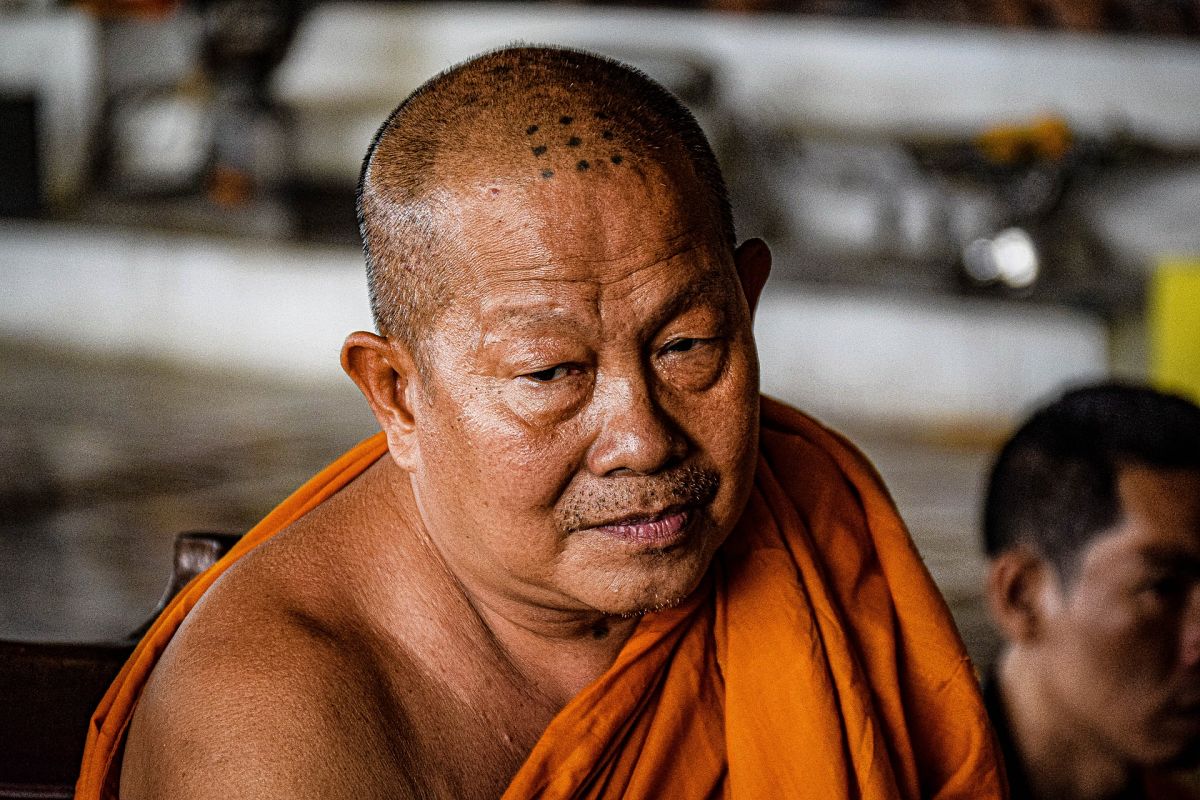
Thailand is a place rich in Buddhist history, learning, and culture. You’ll never understand the people or the approach to business and communication until you understand the philosophy that supports it. Photo by Joshua Steinberg on Unsplash
Religion and Language in Thailand
Religion and language in Thailand are not just background context; they directly shape how people communicate, make decisions, and manage relationships in business settings. Understanding both is essential for interpreting behaviour accurately.
Religion in Thailand
• Buddhism plays a central role in shaping values such as respect, humility, patience, and emotional control across much of the country.
• However, there are also significant Muslim communities in the south, where religious practices, expectations, and social norms may differ, particularly around dress, gender interaction, and dietary requirements.
• In business, this means professionals must remain aware of regional and religious differences, as these can influence communication style, relationship building, and appropriate behaviour in different contexts.
Language in Thailand
• Thai is the official language, and while English is used in international business, fluency and confidence levels can vary significantly.
• Even when English is spoken, communication styles remain culturally influenced, with indirect phrasing and softened messages common.
• For international professionals, this creates a dual challenge of both language clarity and cultural interpretation, where meaning is often conveyed beyond the words themselves.
Key Facts About Thailand
• Location: South-eastern Asia, bordering the Andaman Sea and the Gulf of Thailand, southeast of Burma
• Capital: Bangkok
• Population: ~70 million
• Time Zone: GMT+7
• Currency: Thai Baht (THB)
• Government: Constitutional monarchy
Cultural Awareness Training for Working with Thailand
Develop the skills needed to work effectively with Thai business culture with our practical, expert-led training course.
Explore our Thailand cultural awareness which covers key Thai values, the communication style, business culture, working practices, and etiquette.

You might also like these articles…

Thailand Management Culture Guide
Management Style in Thailand: A Guide for International Managers Contents hide Management Style in Thailand: A Guide for International Managers Management in Thailand The Role…

10 Wonderfully Weird Things About Thai Culture
Step into Thailand’s fascinating world where red Fanta offerings appease spirits, driving shirtless lands men in jail, and strangers repeat your words back like cultural…

Doing Business in ASEAN Countries
Doing business across ASEAN countries? This guide shares practical tips to help professionals navigate the cultural diversity of the region, from relationship-building and hierarchy to…