
Japanese Cultural Values and their Influence on Business
Japanese cultural values help explain how people in Japan approach relationships, work and everyday life. From persistence and endurance to harmony, avoiding waste and maintaining face, these values offer valuable insight into Japanese society and the way business is conducted.

Understanding Japanese Cultural Values
To understand Japanese business culture, it’s essential that you first appreciate Japanese cultural values.
Why?
If you don’t understand the underlying values, then it’s very difficult to understand the Japanese mindset. And if you don’t understand the mindset of the people, you’re never really going to click.
That’s why learning about different cultures – especially if you’re doing business with them – is crucial.
So, we’re going to give you an introduction to some key values in Japanese work culture in under 5 minutes!
If you want to dive deeper, then our Japan cultural awareness training course goes into more detail.
What do We Mean by Japanese Cultural Values?
Cultural values are essentially the beliefs and principles within a culture that shape that culture’s behaviours.
As such, if you’re doing business in Japan, then appreciating the cultural values that underpin Japanese society and work culture will ensure you interact meaningfully with your Japanese peers and drive better outcomes when interacting within this market.
7 Important Japanese Cultural Values

Japan is a country traumatised by natural disasters. Ganbaru, Gaman and Konjou have always been important in helping people move forward after tragedy.
Photo by Ryan McBride on Flickr (CC BY 2.0)
1, 2 & 3. Ganbaru, Gaman, and Konjou: Persistence and Endurance in Japanese Culture
First, let’s start with Ganbaru, Gaman, and Konjou. These can be translated as persistence, endurance, and willpower.
Japan’s isolated and inhospitable landscapes have, over time, resulted in these qualities being seen as essential to life. In Japanese culture, one must strive, make effort, and overcome.
It is these values perhaps, that drive much of the innovation that comes out of Japan in sectors such as robotics, software, and IT.
Japanese society stresses collective achievement, which holds that anything is possible when everyone pulls together with a shared vision and works as a group.
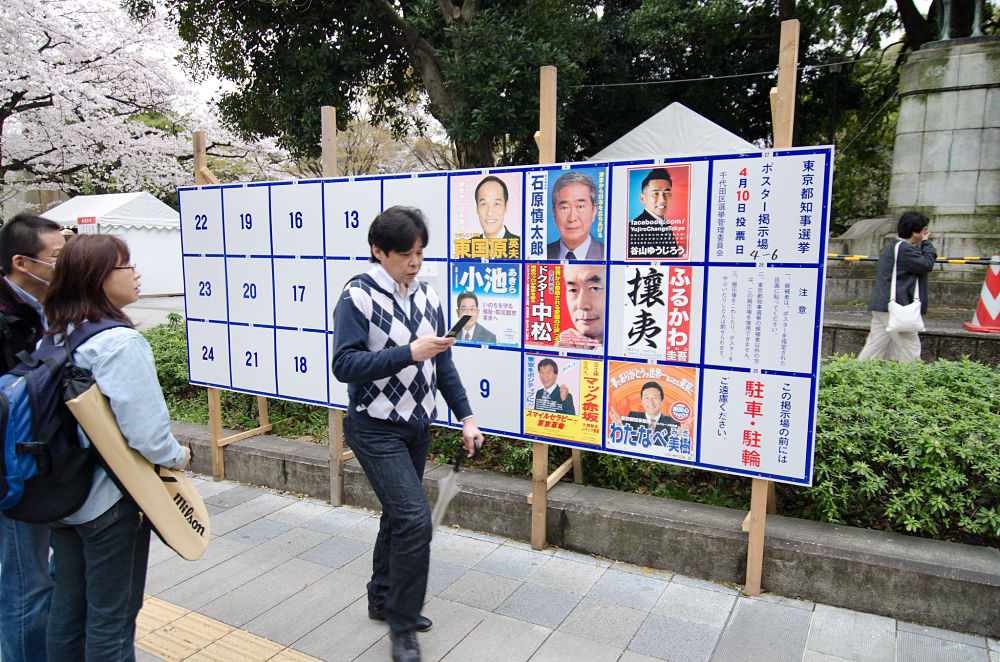
Japanese apathy at election times is often put down to Shoganai, in that people believe it’s not really in their hands!
Photo by Paul Robinson on Flickr (CC BY 2.0)
4. Shoganai: Acceptance and Resilience in Japanese Culture
Another value that has its roots in the sometimes brutal experiences the Japanese have faced at the hands of natural and man-made disasters is that of Shoganai.
Shoganai can roughly be translated as ‘it can’t be helped’. It is an acceptance of fate and that sometimes things are just out of your control.
This also surfaces in the Japanese management style.
The Japanese mentality, therefore, is that when something is, or appears to be, out of your control, then you must accept it and move on.
In some ways contradictory to the values of persistence and endurance, however, shoganai is more a belief that in life, there are greater powers at work.
Rather than complaining about things out of your control, you should channel your energies elsewhere.

‘Mottainai’ written on the back of a truck, followed by the sentence, “I strive towards zero emissions.”
Photo by Hajime Nagahata – Commitment, CC BY 2.0
5. Mottainai: Respect for Resources and Avoiding Waste in Japan
Our next value is Mottainai, which means something along the lines of ‘what a waste’.
Again, closely tied to the Japanese experience of living on an island with limited resources, the Japanese feel regret towards waste of any kind.
It expresses guilt when wasting something considered worthy.
This might be wasted food, wasted time, or a piano that hasn’t been played in a long time.
All are mottainai.

Japanese culture is deeply rooted in the concept of living in harmony with the environment.
Photo by Hideki Nishiyama on Unsplash
6. Wa (Harmony): The Importance of Group Harmony in Japanese Culture
Our next two values are perhaps the most important in understanding Japanese culture.
Both are interrelated and dependent upon one another, but for the sake of simplicity, let’s start with Wa, which means harmony.
Harmony was essential for the Japanese throughout history as a way of maintaining stability.
The teachings of Buddhism and Shinto beliefs also came together to stress peaceful unity with others.
At its core, Wa dictates that the harmony and needs of society take priority over personal opinions or interests. This value heavily influences much of the Japanese mindset.

‘Face’ is an incredibly important part of Japanese culture, which often determines what people can or can’t say.
Photo by Alexandre Chambon on Unsplash
7. Honne and Tatemae: Communication and “Face” in Japanese Culture
This is especially so when we consider the next values of Honne to Tatemae.
Honne can be roughly translated as ‘meaning the truth’ in that people say what they really think about something.
Tatemae, on the other hand, is about what you need to say to maintain face, or group harmony, or when you represent a group.
Tatemae is more about what you say in public as opposed to private. The two can contradict one another.
Honne and Tatemae are often core themes in Japanese TV soaps, films, and novels, showing their central importance in day-to-day life. For foreigners, this behaviour can be interpreted negatively, and some cultures might even perceive it as lying or deceitful because people aren’t saying what they think.
However, for the Japanese, it is tightly connected with the need to maintain harmony and see the bigger picture.
How Japanese Cultural Values Influence Business Practices
Values such as persistence, harmony, restraint, and responsibility to the group help shape many of the expectations found in Japanese working life.
They can influence how people communicate, build trust, make decisions, respond to setbacks and balance individual views with the needs of the wider group.
For anyone doing business in Japan, understanding these underlying values provides useful context for behaviours that might otherwise be misread.
Concepts such as wa, ganbaru, mottainai, and honne and tatemae are not rigid rules, but they can offer valuable insight into why Japanese colleagues, clients, and partners may approach relationships, communication, and business decisions differently.
Succeed in Japanese Business Environments
Cultural values shape how business is done in Japan – from communication and decision-making to relationships and trust.
Our Japan cultural training course helps you turn cultural insight into practical action, enabling you to work more effectively with Japanese colleagues and clients.

You might also like these articles…

How to Respectfully Address People in Japan
How to Address a Japanese Person in Business Contents hide How to Address a Japanese Person in Business 7 Tips on Addressing People in Japan…

Japanese vs Western Work Culture: 10 Cultural Differences
Japanese and Western Work Culture: Why the Differences Matter Contents hide Japanese and Western Work Culture: Why the Differences Matter Japanese vs Western Work Culture…

What is the Japanese Negotiation Style?
How the Japanese Approach Negotiations in Business Contents hide How the Japanese Approach Negotiations in Business 1. Trust and Relationships Come Before Results What This…