
Singapore Business Culture Guide
Understanding Singaporean business culture is essential for professionals working with Singaporean colleagues, clients, or partners. Shaped by hierarchy, harmony, and strong relationship building, doing business in Singapore requires awareness of communication style, workplace values, and the cultural expectations that influence everyday professional interactions.

Singaporean Business Culture: What International Professionals Should Know
Singapore is often perceived as an easy environment for international professionals due to its global outlook and widespread use of English.
However, doing business in Singapore involves navigating a more nuanced cultural landscape shaped by hierarchy, indirect communication, and a strong emphasis on maintaining harmony.
Beneath its efficient and modern business environment, deeply embedded cultural expectations influence how decisions are made, how feedback is shared, and how relationships are built and sustained. These are all topics shared in Singapore cultural awareness training, which is designed to help newcomers better understand the Singaporean business culture.
“The biggest challenge we hear about when training professionals relocating to Singapore or doing business in the country is interpreting communication accurately, as messages are often indirect and shaped by context, hierarchy, and relationships.”
F. Tanaka, Asia Cross Cultural Expert, Commisceo Global
Key Insights into Singaporean Business Culture
• Relationships and trust underpin successful business interactions
• Hierarchy and seniority influence communication and decision making
• Communication is often indirect, particularly in sensitive situations
• Maintaining harmony and avoiding loss of face are key priorities
• Cultural diversity shapes behaviour across all aspects of business
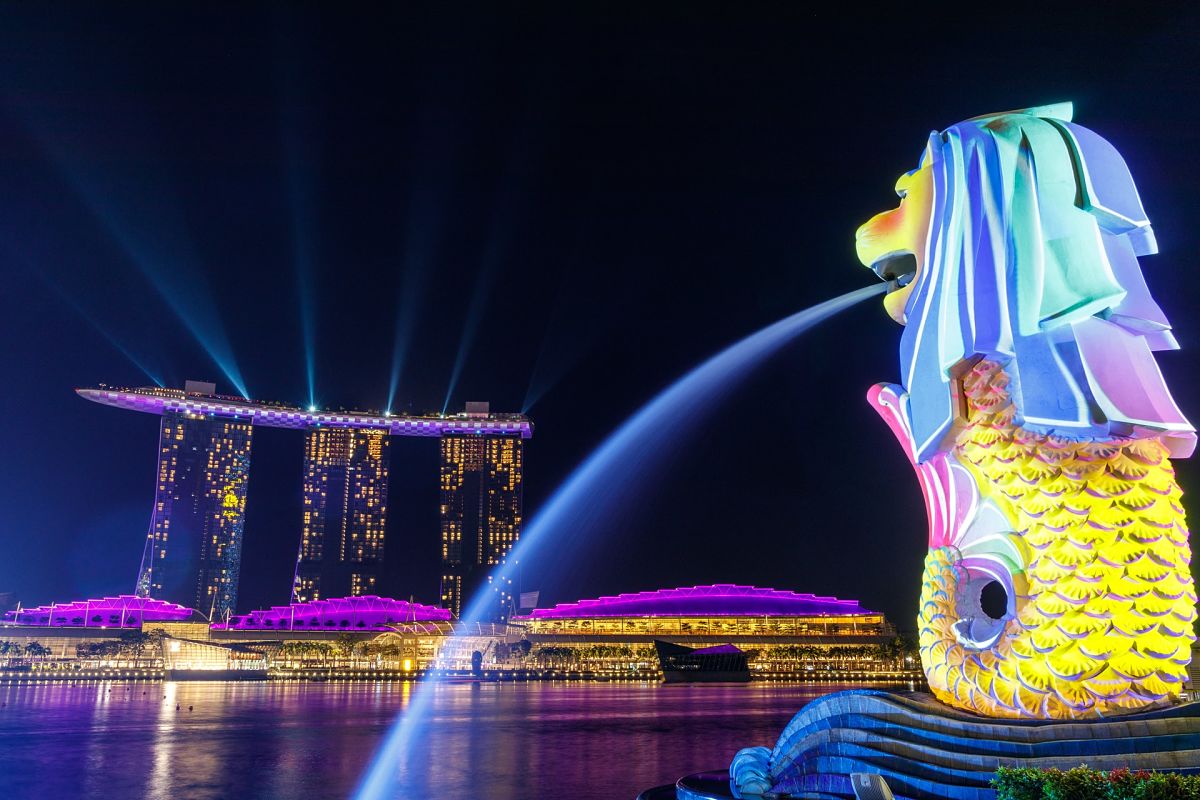
The famous Merlion overlooks Singapore’s iconic Marina Bay Sands. More and more global brands and businesses are setting up in Singapore. Photo by Joshua Ang on Unsplash
Doing Business in Singapore: Business Practices and Culture
Doing business in Singapore requires balancing efficiency with cultural awareness. While processes may appear structured and modern, underlying expectations around respect, hierarchy, and communication style play a critical role in how work gets done.
Business Relationships in Singapore
• Relationships are central to business success in Singapore.
• While the environment is professional and results driven, trust is often built gradually through consistent, respectful interaction.
• Professionals who invest time in developing relationships are more likely to gain cooperation, support, and long term commitment.
• Networks and connections can also play an important role in opening opportunities and facilitating business.
Meetings and Business Interactions in Singapore
• Meetings in Singapore tend to be formal, structured, and purposeful.
• Agendas are often prepared in advance, and participants are expected to arrive well prepared.
• Hierarchy can influence how meetings are conducted.
• Senior individuals may lead discussions, while more junior participants contribute carefully and respectfully.
• It is common for initial conversations to include some light rapport building before moving into business topics.
Decision Making and Negotiation in Singapore
• Decision making in Singapore is often influenced by hierarchy and group alignment.
• While discussions may involve multiple stakeholders, final decisions typically rest with senior figures.
• Negotiations tend to be measured and non confrontational.
• Direct pressure or aggressive tactics are unlikely to be effective.
• What may appear to be agreement during discussions does not always indicate final commitment, as decisions are often confirmed after internal consultation.
For broader regional context, professionals can also explore our guide to doing business across ASEAN countries.
Hierarchy and Workplace Expectations in Singapore
• Hierarchy plays a significant role in shaping workplace dynamics in Singapore.
• Respect for seniority, age, and position is embedded in professional interactions.
• Employees may be less likely to openly challenge authority or express disagreement in group settings.
• Instead, feedback is often communicated carefully or shared privately.
• Understanding these dynamics helps international professionals interpret behaviour more accurately and respond appropriately.
Communication Style in Singapore
Communication in Singapore blends clarity with cultural sensitivity. While English is widely used and business communication may appear direct on the surface, underlying messages are often shaped by the need to preserve harmony and avoid conflict.
Indirect Communication and Face in Singapore
A key feature of communication in Singapore is the emphasis on maintaining “face,” which relates to personal dignity, reputation, and social standing.
As a result:
• Negative messages are often softened or implied rather than stated directly
• Saying “no” explicitly may be avoided
• Phrases such as “we will try” or “it may be difficult” can signal hesitation or disagreement
Understanding these nuances is critical, as taking statements at face value can lead to misunderstandings.
Singaporean Non Verbal Communication
• Non verbal cues play an important role in how messages are interpreted.
• Tone of voice, pauses, and body language can provide additional meaning that is not expressed verbally.
• Silence, for example, does not necessarily indicate agreement.
• It may signal reflection, uncertainty, or polite disagreement.
• Successful communication requires paying attention to these subtle signals and adjusting accordingly.
Communication in Singaporean Business
In Singaporean business culture, communication is shaped by a careful balance between clarity and the need to preserve harmony.
While conversations may appear straightforward on the surface, messages are often moderated to avoid causing embarrassment, challenging authority, or creating tension within the group.
In practice, this means that disagreement is rarely expressed openly, particularly in meetings where hierarchy is present. Junior employees may hesitate to speak up, and silence should not be interpreted as agreement.
Likewise, responses such as “we will try” or “it may be difficult” can signal concern or reluctance rather than commitment. For international professionals, the challenge is not just what is said, but what is not said. Reading tone, hesitation, and context becomes critical to understanding intent.
Creating space for input, inviting perspectives privately, and framing feedback carefully can significantly improve communication and participation without disrupting group harmony.
Read more about the Singaporean communication style.

A family tuck into their lunch together. Eating together is very common in Singaporean business culture. Photo by Galen Crout on Unsplash
Workplace Culture and Values in Singapore
Workplace culture in Singapore is shaped by a combination of traditional values and modern business practices. Understanding these underlying values provides important context for how people interact, make decisions, and build relationships.
Family and Collectivism in Singaporean Culture
• Singaporean society places strong emphasis on collectivism, where group harmony and shared responsibility are prioritised over individual expression.
• Family plays a central role in shaping values, and this often extends into professional life.
• Loyalty, support, and long term relationships are highly valued, influencing how teams operate and how trust is built.
Face and Harmony in Singaporean Culture
• Maintaining harmony is a core cultural priority.
• Avoiding embarrassment, preserving dignity, and protecting relationships are key considerations in both social and professional contexts.
• This focus on harmony influences communication, decision making, and conflict resolution.
• Professionals who are overly direct or confrontational may unintentionally damage relationships.
Hierarchy and Respect in Singaporean Business
• Respect for authority is deeply embedded in Singapore’s cultural framework.
• Influenced by Confucian values, hierarchy is reflected in both formal structures and everyday interactions.
• Senior figures are expected to lead and guide, while junior employees often show deference.
• Understanding how to navigate these dynamics is essential for effective collaboration.
Singapore’s Multi Ethnic Society
• Singapore is a highly diverse society made up primarily of Chinese, Malay, and Indian communities, alongside many international influences.
• Each group brings its own cultural and religious traditions, which can shape expectations around communication, etiquette, and behaviour.
• Being aware of this diversity helps avoid assumptions and supports more effective interaction.
Management Style in Singapore
The management style in Singapore reflects a blend of hierarchical leadership and relationship responsibility.
• Authority is respected and expected, but effective leaders are not simply directive.
• They are also responsible for maintaining harmony, supporting their teams, and ensuring stability within the group.
• In practice, managers are expected to provide clear direction and make final decisions, particularly in more traditional or locally rooted organisations.
• However, this authority is rarely exercised through overt control or confrontation.
• Instead, influence is often applied more subtly, with leaders guiding outcomes while preserving relationships and avoiding public disagreement.
• Employees may be less inclined to act independently without clear instruction, especially where hierarchy is strongly observed.
• This can affect initiative, decision speed, and communication flow, particularly in multicultural or matrix environments where expectations differ.
• Successful leadership in Singapore therefore involves balancing authority with approachability.
For a deeper understanding, see our Singapore Management Guide.
Challenges When Doing Business in Singapore
Working effectively in Singapore requires adjusting to a business culture where communication, hierarchy, and harmony shape how people interact and make decisions.
• Misinterpreting indirect communication: Agreement may reflect politeness rather than commitment, and phrases like “we will try” can signal hesitation rather than confirmation.
• Reading silence as alignment: In meetings, silence often reflects respect or caution, not agreement. This can lead to false consensus and unexpected delays later.
• Navigating hierarchy in discussions: Junior employees may be reluctant to challenge ideas openly, meaning important perspectives are not always voiced in group settings.
• Balancing directness with harmony: Direct or confrontational approaches can damage relationships, particularly if they cause someone to lose face in front of others.
• Understanding how decisions are really made: Decisions may not be finalised in the room and often require internal alignment, particularly among senior stakeholders.

The beautiful Sultan Mosque. It’s important to appreciate the influence of religion and beliefs on the culture, people and working practices. Photo by Charles Postiaux on Unsplash
Tips for Doing Business in Singapore
Successfully navigating Singapore’s business environment requires a thoughtful and culturally aware approach.
• Invest time in building relationships and trust
• Show respect for hierarchy and seniority
• Pay attention to indirect communication and underlying meaning
• Avoid public confrontation or criticism
• Remain patient during decision making processes
• Adapt your communication style to maintain harmony
Business Etiquette in Singapore
Understanding business etiquette in Singapore helps ensure interactions are professional, respectful, and culturally appropriate.
Meeting and Greeting in Singapore
Greetings vary across Singapore’s diverse population, but a handshake is generally appropriate in business settings. Some individuals, particularly from more traditional backgrounds, may prefer more reserved forms of greeting.
Across all contexts:
• The most senior person is usually acknowledged first
• Respectful body language and tone are important
• Allow counterparts to guide the level of formality
Names and Titles in Singapore
Naming conventions vary across ethnic groups:
• Chinese names typically place the family name first
• Malay names may not follow a surname structure and often include “bin” or “binti”
• Indian names may incorporate the father’s name
Using appropriate titles and clarifying how individuals prefer to be addressed demonstrates respect and cultural awareness.
Singaporean Business Card Etiquette
Business cards are treated with a degree of formality and respect.
• Present and receive cards with both hands or the right hand
• Take time to read the card before putting it away
• Avoid handling cards casually or placing them immediately into a pocket
Social Etiquette and Cultural Norms in Singapore
Social etiquette in Singapore reflects the country’s diversity and emphasis on respect, harmony, and cultural sensitivity.
Gift Giving Etiquette in Singapore
Gift giving etiquette in Singapore is shaped by its multi ethnic society, and what is appropriate can vary significantly depending on whether you are interacting with Chinese, Malay, or Indian Singaporeans.
• Chinese Singaporeans place strong emphasis on symbolism: Avoid gifts in sets of four, as the number is associated with death, and do not give clocks, which can carry funeral connotations. Gifts are often presented and received with both hands and may be refused once or twice out of politeness before being accepted.
• Malays (predominantly Muslim) follow religious guidelines: Avoid alcohol, pork products, or anything not halal. Gifts should be given with the right hand or both hands, as the left hand is considered inappropriate for offering items.
• Indian Singaporeans may observe religious sensitivities: Avoid leather items when dealing with Hindus, and be mindful of dietary restrictions. As with other groups, using the right hand when giving and receiving gifts is considered respectful.
• Moderation and intent matter more than value: Gifts are typically modest and symbolic rather than expensive. Overly lavish gifts can create discomfort or be seen as inappropriate in a professional context.
Understanding these nuances helps ensure that a well intended gesture strengthens relationships rather than causing unintended offence.
Dining Etiquette in Singapore
Business dining in Singapore is an important extension of relationship building, where hierarchy, cultural norms, and social awareness all come into play. While meals may feel relaxed, they are still structured environments where behaviour is observed and interpreted.
• Follow hierarchy when seating and starting: Seating arrangements often reflect seniority, and the most senior person typically initiates the meal. Starting before they do can be seen as disrespectful.
• Be aware of multi cultural dining dynamics: Singapore’s diversity means dietary considerations are critical. Halal requirements for Muslim Malays, vegetarian preferences among some Indian Singaporeans, and cultural sensitivities around certain foods should all be respected when choosing venues or ordering.
• Understand the role of sharing and hosting: Meals are often shared, particularly in Chinese settings, with dishes placed in the centre. The host may take responsibility for ordering and may encourage guests to eat more as a sign of hospitality. Refusing repeatedly can be seen as impolite, but overindulgence can also appear lacking in restraint.
• Observe before acting: Table etiquette can vary depending on the cultural context and setting. Whether using chopsticks, cutlery, or eating in a more traditional style, it is best to follow the lead of your hosts rather than assume a single standard.
• Business happens subtly, not formally: While meals are relationship-focused, they can still influence business outcomes. Direct negotiations are less common, but trust, rapport, and impressions formed during the meal can shape future decisions.
Understanding these dynamics helps professionals avoid missteps and use dining situations effectively to build trust and strengthen working relationships.
Social Behaviour and Respect in Singapore
Social behaviour in Singapore is guided by strong expectations around public order, respect, and self discipline. These norms are reinforced not only culturally, but also through clearly defined rules.
• Avoid chewing gum in public: The sale of chewing gum is restricted, and using it casually in public settings can be seen as inappropriate.
• Do not litter or jaywalk: Singapore is known for strict enforcement of public cleanliness and order. Fines for littering or crossing roads improperly are common.
• Public behaviour is expected to be controlled: Loud, disruptive, or confrontational behaviour is frowned upon and can damage your professional image.
• Respect queues and public systems: Queuing is taken seriously, and pushing ahead or ignoring order is seen as disrespectful.
• Be mindful of laws and regulations: Singapore has strict rules covering areas such as smoking, public conduct, and even eating or drinking in certain spaces (e.g. public transport).
Religion and Language in Singapore
Religion in Singapore
• Singapore is a multi religious society where Buddhism, Islam, Christianity, and Hinduism are widely practiced.
• Religion is visible in everyday life and can influence business schedules, public holidays, and social expectations.
• Awareness of religious practices, such as dietary requirements or prayer times, helps ensure respectful and inclusive interactions.
Language in Singapore
• Singapore has four official languages: English, Mandarin, Malay, and Tamil.
• English is the primary language of business and government, making Singapore highly accessible for international professionals.
• However, local expressions and communication styles can still reflect cultural nuances.
Key Facts About Singapore
• Population: ~5.9 million
• Location: Southeastern Asia, islands between Malaysia and Indonesia
• Capital: Singapore
• Official languages: English, Mandarin, Malay, Tamil
• Major religions: Buddhism, Islam, Christianity, Hinduism
• Government: Parliamentary republic
Cultural Awareness Training for Singapore
Develop your team’s ability to work effectively in Singapore with our expert led cultural awareness training.
Explore our Singapore cultural awareness course which covers the business culture, communication style, business etiquette, working practices and much more.
You might also like these articles…

Singapore Management Culture Guide
Management Style in Singapore: A Guide for International Managers Contents hide Management Style in Singapore: A Guide for International Managers Management in Singapore The Role…

The Singaporean Communication Style: A Guide for Foreign Business Professionals
Learn how the Singapore communication style shapes doing business, workplace dynamics, and decision making in Singaporean organizations.

Doing Business in ASEAN Countries
Doing business across ASEAN countries? This guide shares practical tips to help professionals navigate the cultural diversity of the region, from relationship-building and hierarchy to…