
Understanding Japanese Work Culture
Curious about Japanese culture beyond the business card? This article shares nine fascinating insights that reveal how tradition, etiquette and everyday behaviours shape life and work in Japan.

9 Fascinating Insights to Help You Understand Japanese Work Culture
Working with the Japanese? Does Japanese business culture interest you? Well, you’re not alone! Lots of people find Japan and the Japanese absolutely fascinating.
Why? It’s culture. So rich, colourful, and meaningful, it captures the imagination of many.
By way of introducing the culture, we’re going to look at some of the quirkier aspects of the culture. We’ve chosen 9 aspects of Japanese culture we find fascinating…and hope you do too!

Image thanks to the blog by Blake M Williams
1. The Japanese Do Not Use Street Names
A fascinating insight into how the Japanese see space around them is in their address system.
Whereas in much of the world people see the streets as being the important spaces, and therefore having names or numbers, in Japan it’s actually the space between the streets that is prioritized.
That’s why in Japan you don’t have street names; you have blocks, and within blocks, you have building numbers. And if you think the building numbers are in order, well, you’re wrong – buildings are numbered according to the sequence in which they were built!

Photo taken in Agano-shi, Niigata-pref (Japan) by Yutacar on Unsplash
2. The Japanese Practice of Nominication
The Japanese are well-known for being very polite and indirect in their communication style.
At work, it’s difficult for people to express their opinions and feelings openly. Especially when it comes to anything negative, the Japanese hold back. For them it’s all about social harmony.
In order to get around this, the Japanese have created a fascinating way for colleagues to feel at ease and to share feelings or opinions without fear – nominication.
Essentially, nominication is about going to a bar or restaurant as a team, getting drunk and speaking your mind!
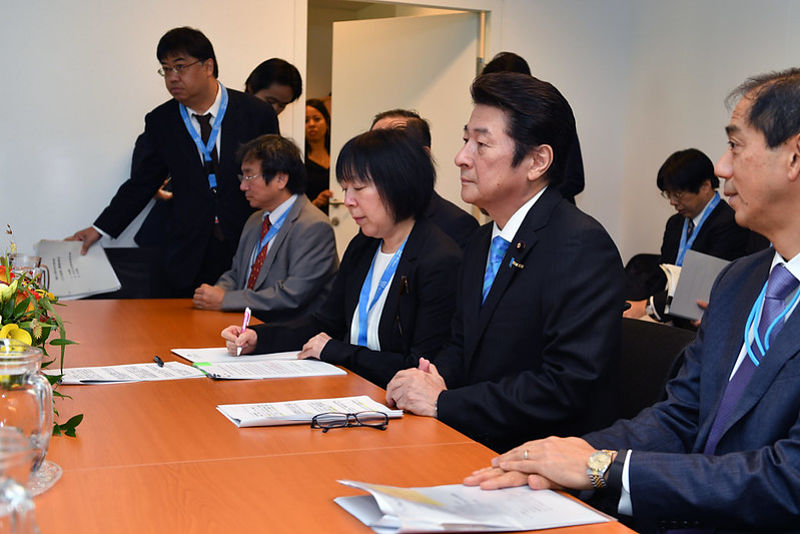
Photo by IAEA Imagebank on Flickr (CC BY 2.0)
3. Nemawashi and Japanese Work Culture
Japanese culture is group-oriented and collectivist.
A fascinating result of this is that they have, over centuries, created a consensus-building process as a means of bringing about change.
Nemawashi is an example of a core value in Japanese work culture and involves workers who have an idea, creating consensus at peer level before taking it up the chain of command. It’s been designed to allow for ideas to flow upwards without causing loss of face or disrespecting hierarchies.

Players of the Japan women’s national football team (Nadeshiko Japan) saying bye to supporters at Wembley Stadium 2012. Photo by Christopher Johnson on Flickr (CC BY 2.0)
4. Saying ‘Bye’ in Japanese Etiquette
In Japanese etiquette, a customer or client is treated with the utmost respect.
When customers or visitors leave work premises or restaurants, it’s not surprising to see whole teams of staff follow them to the door and then bow until they have left.
Even if in an elevator, employees may well stay bowing until the doors have closed. Saying ‘bye’ is a bit of an art in Japan.

Photo by Izhak Agency on Unsplash
5. The Elevator Captain in Japanese Culture
In Japan, if you happen to be the first person into an elevator, you, by default, become the elevator captain!
It’s your job to stand close to the controls, hold the door open for people, press the floor numbers and allow people to leave. When leaving the elevator at your floor, make sure you’re the last to leave.
Collective rights and responsibilities are very much a part of Japanese culture.

Photo by Ivan Mlianric on Flickr (CC BY 2.0)
6. Itadakimasu! Japanese Dining Etiquette
Japanese culture is deeply rooted in Shinto beliefs and a connection with nature.
A fascinating expression of this is that the Japanese people say, “Itadakimasu!” before they eat a meal.
It’s similar to a prayer, although not in the formal sense, and is their way of showing respect to the food and where it has come from.

Photo by Calamity_Sal on Flickr (CC BY 2.0) shows shoes outside temple.
7. Removing Shoes in Japan
One thing all foreigners visiting Japan comment on is how clean and hygienic the Japanese are.
The Japanese are sticklers for detail, and one thing they all do is remove their shoes in certain places.
When entering a home, temple, office, or restaurant, you’ll find shoe racks and slippers, indicating that shoes must come off.

Sake is a common alcoholic drink in Japan. Photo by Jouko Karvonen on Flickr (CC BY 2.0)
8. Japanese Drinking Etiquette
A fascinating aspect of Japanese etiquette is that people do not pour drinks for themselves.
In a group setting, pouring yourself a drink is seen as bad manners.
You should pour for others, and they should pour for you. If you don’t want to drink any more, then simply leave your glass full!

Modern-day traffic lights in Sapporo, Japan. Photo by Jacky Yu on Unsplash
9. Blue Traffic Lights in Japan
Japanese traffic lights aren’t red, amber and green – they’re red, amber and blue!
Well, actually, that’s not quite true. Once upon a time they were blue. That’s because in the Japanese language, there wasn’t actually a word for green, so they used blue instead.
Today, however, as a nod to the original blue traffic lights, the Japanese use the bluest shade of green they can.
Main photo by Jamie Haughton on Unsplash
Deepen Your Understanding of Japanese Business Culture
If you’re working with Japanese clients or colleagues, understanding the deeper cultural drivers behind communication, hierarchy, and decision making is essential for success. Japanese business culture places strong emphasis on relationships, harmony, and respect, all of which shape how professionals interact and collaborate.
Read our guide to Japanese business culture to strengthen your cultural awareness and improve your effectiveness when doing business in Japan.

You might also like these articles…
Japan Business Culture Guide
Japanese Business Culture: What International Professionals Should Know Contents hide Japanese Business Culture: What International Professionals Should Know Key Insights into Japan Business Culture Doing…

Nominication – How Alcohol Helps Communication in Japanese Business Culture
Unpack the quirky concept of nominication and why sharing a drink after hours can be the key to building trust and stronger business relationships in…

Japanese Business Etiquette: Meetings and Professional Behavior
Japanese business etiquette is rooted in respect, formality and long-term relationship-building. Learn to make a good impression when working with the Japanese.