
Etiquette Tips for Doing Business in Iran
Planning to do business in Iran? This guide offers essential tips on navigating Iranian culture, from building trust to understanding communication styles and etiquette. Whether you’re a manager, consultant or entrepreneur, these insights will help you create respectful connections and succeed in one of the Middle East’s most nuanced business environments.

Business Etiquette You Need to Know When Visiting Iran
Images and stereotypes of Iranian people and society, unfortunately, cloud the great colour, warmth, and hospitality of this ancient people, which makes doing business in Iran such a fascinating and fun experience.
Doing business in Iran requires gaining some objective understanding of the people, culture, etiquette, and approach to business. By acquiring such cross cultural skills, international business people can greatly enhance their business experiences in Iran.
These few tips on Iranian business culture and etiquette are in no way meant to represent a comprehensive summary covering all aspects of doing business in Iran, but concentrate more on pointers to help minimise cultural misunderstandings and poor communication.
To dive deeper, you can visit our guide to Iranian business culture or take an Iran cultural awareness course.
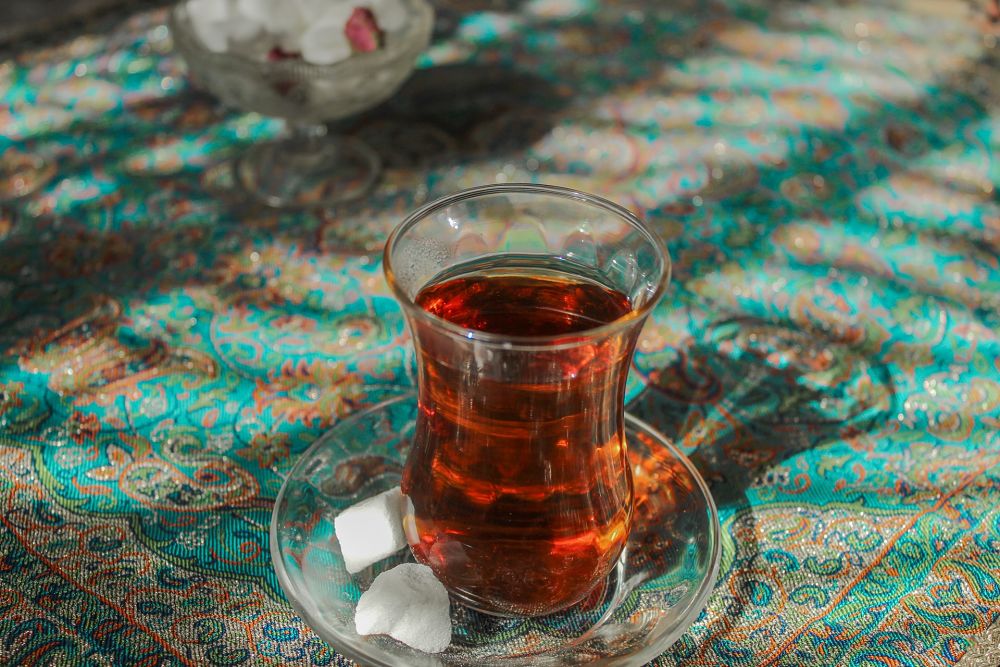
If you’re going to Iran on business, then get ready for a lot of tea! Always try to accept offers of tea, as it makes people feel happy that they have shown good hospitality.
Photo by abolfazl ranjbar on Unsplash
Meeting and Greeting Etiquette in Iran
When meeting someone in a business or official context, always shake hands. As a male, you should wait to see if women extend their hands; if they do not, then simply nod your head and smile. Placing your hand on your heart is a nice touch.
The most common greeting in Iran is ‘salam‘, which originates from the Arabic greeting ‘Asalamu alaykum‘ (peace be upon you). One would also reply with ‘salam‘.
When departing, Iranians will generally use ‘khoda-hafez‘ (may God preserve you).
When doing business in Iran, stick to formalities. Once a relationship has been established, your Iranian counterpart will quickly start to address you with your first name.
- Men are addressed with ‘agha’ followed by the surname. So, Alan Jones will be ‘Agha-ye Jones’.
- With women, you would use ‘khanoom’. So, Samantha Jones will be ‘khanoom-e Jones’.
- Professionals with titles will be addressed similarly, for example, ‘Doctor-e Jones’.
What to Wear When Working in Iran
When working in Iran, you will notice that most Iranian officials and businesspeople wear clothing consisting of trousers, a shirt, and a jacket. Many officials will be seen with collarless shirts. Ties are very uncommon.
As a male, you would be expected to be smart and conservative. A suit is standard, although wearing a tie is not necessary.
Whether doing business in Iran or visiting, women should wear very conservative clothing that covers arms, legs, and hair. When in public, women must cover their hair with a scarf. However, the last decade has seen incredible changes in what the authorities are willing to tolerate.
Women can now be seen wearing make-up, jeans, and scarves that barely cover their hair. However, as a foreigner, it is best to err on the side of caution, especially in these politically sensitive times.

Foreign women doing business in Iran should cover their hair with a loose shawl or scarf. In people’s homes, you can remove them, or if you are working only with Iranian women.
Photo by Blondinrikard Fröberg
Business Meeting Etiquette in Iran
If you plan on doing business in Iran, appointments should be made in advance, both via telephone and in writing. Prior to arriving in Iran, telephone again just to confirm time and place.
Business hours are Saturday to Thursday, 9 a.m. – 5 p.m. Lunch is usually an hour at around 1 p.m. Friday is a holiday. No business will take place so either try to avoid it or ensure you can use it to see some of Iran.
There are a few key holidays to avoid in Iran. Nowrooz is the major holiday for Iranians. Although its roots are in Zoroastrianism, this New Year celebration is an integral part of Iranian culture. All offices, businesses, shops, etc will close for 2-3 weeks.
Other times to avoid doing business are Ramazan (the month of fasting), Eid-e Fetr (festival celebrating the end of Ramazan), Eid-e Ghurban (celebrating the end of the pilgrimage), and Ashura (the tenth day of Muharram).
Punctuality in Iran is rare. However, it will be expected of you. If you are doing business with government officials in Iran, be prepared to be kept waiting. The administration and bureaucracy in Iran can be chaotic, meaning that officials may need to address an important issue before seeing you. Be patient and courteous. If you like tea, do not be afraid to ask for lots of it!
Although many Iranians in business and in the higher levels of government will have a good understanding of English, it is best to arrange for your own interpreter to accompany you.
At the beginning of any meeting, engage in niceties and ask after people’s health, families, work, etc. Wait for your counterpart to initiate the change in conversation to business matters.
Business Negotiation Etiquette in Iran
Before doing business in Iran, appreciate this: Your success is defined by your aptitude to build effective personal relationships combined with a clearly outlined and well-presented proposal.
Business is personal in Iran. Many businesses are family-owned and run. Even within government, officials usually work within networks of friends and associates. If you have influential friends in Iran, do not be afraid to call in favours. Just be prepared to repay them in the future. This is all part of doing business in Iran.
Building a relationship with your Iranian counterpart(s) is critical. The first meeting should be solely focused on getting to know each other. Once a relationship has been established, you can safely move on to business matters.
Iranians are astute businesspeople. They enjoy haggling and getting concessions, so be prepared for long negotiations.
Decision-making can be slow. It is most likely that you will meet and negotiate with less senior members of a family or state department first. Once you are seen as trustworthy, you will then move on to meet more senior members.
Implementing decisions is just as slow. Iran’s red tape and layered bureaucracy mean a lot of waiting. Applying pressure in a non-confrontational way can help speed matters up, although the most effective way to do so is to use people of influence to help you.
The above examples point to a few considerations one must make before doing business in Iran. By demonstrating an understanding of Iranian culture and etiquette, you maximise the potential of your business venture.
Photo by Mohsen Rezaei on Unsplash
Understanding Ta’arof in Iranian Culture
If you are working with Iranian colleagues or doing business in Iran, understanding ta’arof is essential. This unique system of politeness shapes communication, hospitality, and decision making, and can often be misunderstood by those unfamiliar with the culture.
Our in-depth guide to ta’arof explains how it works in everyday life, social settings, and business interactions. It will help you interpret behaviour more accurately, respond appropriately, and build stronger relationships with Iranian counterparts.
You might also like these articles…

Iran Business Culture Guide
Iranian Business Culture: What International Professionals Should Know Contents hide Iranian Business Culture: What International Professionals Should Know Key Insights into Iran Business Culture Doing…
10 Deadly Stereotypes about Iran We Hear in Cross Cultural Training
Challenge dangerous misconceptions about Iran with factual insights from cross-cultural training experts. Discover the truth behind common stereotypes. Essential reading for dispelling Iranophobic myths and…
Ta’rof – Understanding the Essence of Iranian Etiquette & Culture
Learn about ta’rof in Persian culture and how this system of etiquette and politeness can influence doing business in Iran or working with Iranians.